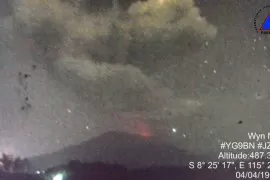
Subandriyo, the Head of the Geology Disaster Development Research and Technology Office in Yogyakarta pointed out on Monday, that the latest eruptions were a phreatic explosion or an ultravulcanian eruption, which was caused by gas accumulation on the surface and not by magma activity.
"The eruption this morning was spatially phreatic, caused by gas accumulation, which is different from 2010's eruption that was caused by magma activity," he stated.
As the eruption was spatially phreatic, Mount Merapi had blasted only gas and small volcanic material, such as ashes and gravel and not lava or hot clouds.
Based on the Geology Disaster Development Research and Technology Office's observation, Subandriyo said that a tectonic quake of the magnitude of 4.7 on the Richter scale had taken place in Ciamis on Monday at 4:52 a.m. Indonesian Western time zone, and had become one of factors causing the eruption.
"As the eruption happened on the surface and wasn't caused by lava activity, Mount Merapi didn't indicate any kind of early or sequel eruptions," he added.
Subandriyo also noted that the lava dome that had remained open after 2010's eruption and the gas contained in the mountain had also caused Mount Merapi to smoke, which could have been triggered by any geological factors.
Since 2010's eruption, Mount Merapi has fumed thrice, but the phreatic eruption on Monday morning was the biggest. (*/DWA)
: Dewa Sudiarta Wiguna
COPYRIGHT © ANTARA 2026
Dilarang keras mengambil konten, melakukan crawling atau pengindeksan otomatis untuk AI di situs web ini tanpa izin tertulis dari Kantor Berita ANTARA.